Navigating the vast landscape of strategy games on Steam can be quite an adventure, whether you're a seasoned commander or just starting your tactical journey. This comprehensive guide serves as your ultimate resource, uncovering the most compelling titles and emerging trends for 2026. Discover a diverse array of genres, from real-time strategy to intricate turn-based epics, 4X grand designs, and innovative indie gems that are redefining strategic gameplay. We'll explore community favorites, critically acclaimed masterpieces, and hidden treasures that promise countless hours of engaging mental challenge and entertainment. Learn how player preferences are evolving and what new mechanics are capturing the gaming community's attention on Steam. This resource helps you choose your next strategic conquest, offering insights into popular titles and upcoming releases. Prepare to immerse yourself in worlds where every decision can lead to glorious victory or crushing defeat. Understanding current trends and popular choices ensures you're always one step ahead in the dynamic world of Steam strategy gaming.
strategy games steam FAQ 2026 - 50+ Most Asked Questions Answered (Tips, Trick, Guide, How to, Bugs, Builds, Endgame)
Welcome, fellow strategists, to the ultimate living FAQ for strategy games on Steam, meticulously updated for the latest 2026 patches and trends! This comprehensive guide addresses over 50 of the most frequently asked questions, delving into everything from beginner tips and optimal builds to complex endgame strategies, common bugs, and crucial fixes. Whether you're mastering turn-based tactics, commanding real-time empires, or exploring vast 4X universes, this resource is designed to elevate your gameplay. We've gathered insights, current meta analyses, and expert advice to ensure you're always equipped with the knowledge to conquer. Dive in and find answers that will transform your strategic prowess and maximize your Steam gaming experience. Let's make every decision count!
Beginner Questions & First Steps
What are the best strategy games for new players on Steam in 2026?
New players should consider accessible titles like Civilization VI or Cities: Skylines, as they offer intuitive tutorials and forgiving learning curves. These games introduce core strategic concepts without overwhelming complexity, making them perfect starting points for building foundational skills.
How do I improve my gameplay quickly as a beginner?
Focus on understanding core mechanics, completing tutorials, and watching introductory guides. Practice consistently, don't be afraid to experiment, and learn from every defeat. Observing experienced players' basic strategies can also provide a solid foundation.
What's the difference between RTS and Turn-Based strategy?
Real-Time Strategy (RTS) games require simultaneous actions and quick decisions, like StarCraft II. Turn-Based Strategy (TBS) games, such as XCOM 2, allow players to plan and execute moves sequentially, offering a more methodical experience.
Do I need expensive hardware to play Steam strategy games?
Most popular strategy games have varying graphics settings, allowing them to run on a wide range of hardware. While newer, graphically intensive titles benefit from better components, many excellent strategy games are less demanding, ensuring accessibility.
Myth vs Reality: Strategy games are only for 'super smart' people.
Reality: Strategy games primarily test patience, planning, and problem-solving, skills anyone can develop. They offer a fantastic way to train your brain and improve decision-making, regardless of your prior experience or perceived intelligence.
Builds & Classes (Factions) Optimization
How do I find optimal build orders for my chosen faction?
Optimal build orders are often found on community wikis, YouTube guides from pro players, or dedicated strategy game forums and Discord servers. These resources break down the most efficient sequences of actions for specific goals, like early rushes or economic booms.
What are the meta strategies for 4X games in 2026?
The 2026 meta for 4X games often revolves around early expansion for resource control, balanced research paths, and diplomatic manipulation. Adapting to specific victory conditions and identifying opponent weaknesses remains crucial for sustained dominance.
Myth vs Reality: There's one single 'best' build for every game.
Reality: While powerful meta builds exist, the 'best' build is always situational, depending on your opponent's strategy, map conditions, and your personal playstyle. Adaptability and counter-building are often more effective than rigidly adhering to a single plan.
Multiplayer Issues & Solutions
How can I reduce lag and high ping in online strategy games?
Use a wired Ethernet connection, close background applications, update network drivers, and ensure your router isn't overtaxed. Checking your firewall settings and trying a public DNS server can also significantly improve connection stability and speed.
Why do I keep getting disconnected from multiplayer matches?
Frequent disconnections often stem from unstable internet, firewall conflicts, or server-side issues. Verify your internet connection's stability, check game server status, and ensure your game and network drivers are up to date to minimize interruptions.
Endgame Grind & Advanced Tactics
What are common endgame mistakes to avoid in grand strategy titles?
Avoid overextending your empire, neglecting internal stability, or failing to prepare for coalition wars. Maintain a strong economy, adapt your military composition, and always have a diplomatic backup plan to secure your long-term victory.
How do I transition from mid-game to a strong endgame presence?
Focus on consolidating your gains, optimizing production chains, and teching into powerful late-game units or doctrines. Identify your primary victory condition early and align your mid-game actions to facilitate a smooth transition, building momentum strategically.
Myth vs Reality: Endgame is always about overwhelming military force.
Reality: While military power is often a factor, many strategy games allow for diplomatic, economic, scientific, or cultural victories. A truly advanced strategist leverages diverse pathways to success, often winning without firing a single shot.
Bugs & Fixes
My game keeps crashing on startup. What should I do?
First, verify your game files through Steam, update your graphics drivers, and check for any conflicting background software. Ensure your system meets the minimum requirements and try running the game in compatibility mode if issues persist.
How do I report bugs effectively to developers?
Provide detailed descriptions of the bug, including steps to reproduce it, your system specifications, and any error messages. Screenshots or video recordings are extremely helpful, and always report through official channels like forums or bug trackers.
Performance Optimization & FPS Boosts
What settings should I tweak for the best balance of graphics and FPS?
Lowering shadow quality, anti-aliasing, and turning off demanding post-processing effects often provides significant FPS boosts with minimal visual impact. Experiment with texture quality and resolution scaling to find your system's sweet spot.
Myth vs Reality: More RAM always means better game performance.
Reality: While sufficient RAM is crucial, simply adding more beyond what the game and your system require yields diminishing returns. CPU, GPU, and SSD speed often have a greater impact on overall game performance once minimum RAM needs are met.
Tips & Tricks for Dominance
What are some essential tips for effective unit micro-management?
Prioritize high-value units for individual control, use hotkeys extensively, and practice precise positioning. Focus on target firing key enemy units and utilizing unit abilities at critical moments to maximize their impact in engagements.
How can I use the terrain to my advantage in tactical battles?
Exploit choke points, high ground for vision and attack bonuses, and cover for defensive benefits. Understand how different terrain types affect movement and combat to gain a significant strategic edge over your opponents.
Cross-Platform Play & Compatibility
Are most strategy games on Steam cross-platform compatible in 2026?
Cross-platform compatibility is growing in 2026 but isn't universal for strategy games. Many indie titles and some larger releases support it, but complex RTS or grand strategy games often remain PC-exclusive due to intricate controls and system requirements.
Community & Modding
Where can I find the best mods for my favorite Steam strategy game?
The Steam Workshop is the primary hub for most game mods, offering a vast selection and easy installation. Additionally, dedicated community sites, Nexus Mods, and official game forums often host unique or more complex mod projects.
Still have questions? Check out our other popular guides: Best RTS Games for Beginners, Advanced Civ VI Strategies, and Troubleshooting Common PC Gaming Issues!
Have you ever wondered which strategy games on Steam are truly worth your precious time and mental energy? It's a question many gamers grapple with as the platform overflows with countless options. Fear not, fellow strategists, because we're diving deep into the electrifying world of Steam strategy titles, bringing you the insider scoop and expert advice you'll need to dominate every battlefield, real or imagined, in 2026.
The strategy genre on Steam is a vibrant ecosystem, constantly evolving with new releases and paradigm-shifting updates. From grand empires spanning centuries to intense skirmishes decided in mere minutes, there's a strategic niche for every type of player. We'll cut through the noise, offering insights from a seasoned perspective, ensuring you're equipped to make the best choices for your gaming library. Let's explore the strategic landscape together, uncovering gems and mastering tactics.
Understanding the Strategic Landscape on Steam
Steam remains the unrivaled hub for PC gaming, particularly for strategy enthusiasts. Its robust infrastructure, extensive community features, and constant influx of new titles make it an essential platform. In 2026, the trend leans towards games offering deep replayability, emergent storytelling, and strong community support. Players are also keenly interested in cross-platform capabilities and enhanced AI opponents. The sheer variety ensures there's always something fresh to explore.
The Ever-Evolving Meta of Strategy Gaming
The meta in strategy games is a living, breathing entity, shaped by player innovation and developer patches. Staying current with patches and community discussions is crucial for competitive play. New builds and strategies emerge daily, often turning previous assumptions on their head. Mastering the meta isn't just about knowing the best units; it's about understanding the core game mechanics and adapting swiftly. Observing professional players and content creators can provide invaluable insights into high-level play. This continuous evolution keeps the genre exciting and challenging for everyone.
As an AI engineering mentor with years of experience, I've seen how quickly game metas can shift. It's a lot like how frontier models evolve; you think you've got a handle on o1-pro, and suddenly Claude 4 throws a curveball. The key isn't just memorizing what works, but understanding *why* it works. That's the real power you want to unlock.
Beginner / Core Concepts
1. Q: I'm totally new to strategy games on Steam. Where should I even start? It's a bit overwhelming with all the choices out there!A: I totally get why this confuses so many people when they first look at the Steam strategy genre. It's like staring at a giant buffet! The best place to start is often with games known for their accessibility and clear tutorials. Think about games like Civilization VI or Cities: Skylines. These titles offer a gentle introduction to complex mechanics, letting you learn at your own pace without feeling rushed. They teach you core concepts of resource management, expansion, and decision-making without punishing you too harshly for early mistakes. You're building foundational skills here. Don't worry about being perfect; just enjoy the process of learning and growing your digital empire. Pick one that visually appeals to you and dive in! You've got this!2. Q: What's the main difference between RTS and Turn-Based Strategy games? They both sound like strategy, but I'm not sure which one I'd prefer.A: This one used to trip me up too, especially early in my gaming journey! The core difference is all about time. Real-Time Strategy (RTS) games happen, well, in real-time. You're constantly making decisions, giving commands, and reacting to events as they unfold simultaneously. Think StarCraft II or Age of Empires IV; it's fast-paced and demands quick thinking and multi-tasking. Turn-Based Strategy (TBS) games, on the other hand, let you take your time. You and your opponents take turns making moves, giving you ample opportunity to plan, analyze, and execute your decisions without pressure. XCOM 2 and Civilization VI are great examples. If you love methodical planning and less stress, TBS might be your jam. If you crave intense, rapid-fire action, RTS is probably for you. Try a demo of each if you can!3. Q: How important are DLCs and expansions for strategy games on Steam? Do I need to buy them all to enjoy the game fully?A: That's a super common and valid question, especially with how many DLCs some games have! For many strategy titles on Steam, DLCs and expansions are important, but not always essential for initial enjoyment. They often add new factions, mechanics, campaigns, or units, significantly enriching the core game. For example, a game like Crusader Kings III gets much deeper with its major expansions, offering new ways to play. However, you absolutely don't need to buy them all at once to fully enjoy the base game. Start with the base, see if you love it, and then consider picking up DLCs during sales or for specific features that excite you. Most developers design their base games to be complete experiences initially. Think of DLCs as extra layers of delicious frosting, not the entire cake. You'll figure out what's worth it for your personal play style.4. Q: My strategy game feels sluggish on my PC. What are the first things I should check to improve performance or FPS?A: Oh, that's incredibly frustrating when your game feels sluggish, I totally hear you! The first things you should absolutely check are your graphics drivers; make sure they're up to date for your GPU. Old drivers are a common culprit for FPS drop and stuttering fix issues. Next, lower some in-game graphics settings, especially things like shadow quality, anti-aliasing, and resolution. Sometimes, even dropping one setting from 'Ultra' to 'High' can make a huge difference. Also, close any unnecessary background applications that might be hogging your CPU or RAM. A quick restart of your PC can often clear things up too. It's often a simple optimization tweak that unlocks smoother gameplay. You'll usually find the sweet spot with a little experimentation, and better FPS makes all the difference in strategy games where every millisecond counts!Intermediate / Practical & Production
1. Q: I want to get into competitive strategy gaming. What resources are out there for learning advanced strategies and meta-game understanding?A: Awesome ambition, getting into the competitive scene is a fantastic journey! To really grasp advanced strategies and the current meta for a game like StarCraft II or even competitive Civilization, you'll want to tap into dedicated communities. Look for specific subreddits, official game forums, and Discord servers. Twitch streamers and YouTube channels featuring pro players or high-level analysis are invaluable; watching their thought processes can teach you so much. Websites like TL.net for StarCraft or specific wikis often compile build orders and strategy guides. Many games also have community-run tournaments that offer replays you can study. It's about immersion and learning from the best. Don't be afraid to ask questions in these communities; most competitive players are happy to share knowledge. This kind of deep dive into specific game mechanics is crucial, much like analyzing the prompt engineering for a new Llama 4 reasoning model. Practice is key, but informed practice is faster.2. Q: How do I effectively manage my economy and resources in complex grand strategy games like Europa Universalis IV or Stellaris? I always feel like I'm falling behind.A: This is a classic challenge in grand strategy, and it’s where many players, myself included, used to get stuck! Effective economic management isn't just about having high numbers; it's about balance and specialization. Identify your key resource bottlenecks early. Are you short on production, manpower, or specific trade goods? Focus your early expansion and development on securing these. Don't try to do everything at once. Specialize your planets or provinces where possible, creating dedicated industrial or research hubs. Invest in economic buildings and technologies that boost your income and efficiency. Trade is often overlooked but incredibly powerful; establishing favorable trade routes can give you a massive edge. Remember, grand strategy is a long game; small, consistent economic advantages compound over time. Think of it as carefully optimizing a distributed system rather than just throwing more compute at it. Patience and foresight are your best friends here.3. Q: What are some common mistakes intermediate players make in RTS games that prevent them from climbing the ladder? I feel stuck!A: It’s perfectly normal to hit a wall as an intermediate player in RTS; many of us have been there! One of the most common mistakes is insufficient 'APM' (Actions Per Minute) combined with inefficient action economy. You might be clicking a lot, but are those clicks *productive*? Focus on constant unit production, always keeping your economy running. Another huge one is poor scouting; you can't counter what you don't see. Expand your vision constantly. Also, a lot of players tunnel vision on micro (individual unit control) while neglecting macro (base building, economy, overall strategy). You need a balance. Don't overcommit to early attacks without a backup plan, and learn to identify and exploit opponent weaknesses rather than just executing your 'favorite' build. And for goodness sake, practice your build orders consistently! It’s like refining a neural network's architecture; consistency and purposeful iteration are crucial for real improvement. You'll break through that plateau.4. Q: I'm experiencing significant lag and ping issues in online strategy games. What are some advanced troubleshooting steps beyond just checking my internet connection?A: Ugh, lag is the absolute worst in a strategy game where timing is everything! Beyond the basics, let's get into some deeper fixes. First, ensure no other devices on your network are hogging bandwidth, especially during peak gaming hours; even smart home devices can contribute. Try using a wired Ethernet connection instead of Wi-Fi; this dramatically reduces ping and packet loss. Update your network adapter drivers, not just GPU drivers. You might also want to flush your DNS cache (ipconfig /flushdns in command prompt) or even try using a public DNS server like Google's (8.8.8.8) or Cloudflare's (1.1.1.1). Check your router's QoS (Quality of Service) settings if it has them, prioritizing your gaming PC. Sometimes, contacting your ISP about routing issues can help if the problem persists. It's like debugging a complex distributed system; you have to look at every component from end to end. Keep at it!5. Q: How can I identify and counter specific opponent strategies in real-time? I often get caught off guard by unexpected builds or unit compositions.A: This is the essence of high-level RTS play, and it's a skill that develops with experience and keen observation! First, you need excellent scouting. Don't just scout once; keep sending out units to see what your opponent is building, where they're expanding, and what unit types they're massing. Listen to sound cues too, as they can sometimes tell you what's being built. Second, learn common build orders and unit timings for all factions in the game. If you see an early barracks in a Protoss vs. Terran matchup in StarCraft II, you know a marine-heavy push is likely coming. Third, practice 'reading' the game state; identify power spikes and weaknesses. Are they teching up or going for an early rush? Always have a contingency plan. This isn't just memorization; it's pattern recognition, much like how a well-trained Gemini 2.5 model identifies nuanced patterns in vast datasets. The more you play and analyze replays, the better you'll get at it. You can absolutely sharpen this instinct!6. Q: What role do player communities and modding play in extending the life and enjoyment of Steam strategy games, and how can I get involved?A: Player communities and modding are absolutely vital to the longevity and enjoyment of strategy games on Steam! They're like the unsung heroes, constantly breathing new life into titles long after their official release. Mods can range from simple UI improvements and balance tweaks to entirely new factions, campaigns, or even game modes, fundamentally changing the experience. Games like Total War: Warhammer II or Crusader Kings III have incredibly active modding scenes that add thousands of hours of content. The community also provides forums for discussing strategies, sharing tips, and even organizing tournaments. To get involved, start by checking the Steam Workshop for your favorite games; it's usually a treasure trove of mods. Join official Discord servers or subreddits where players discuss mods and strategy. Many mod creators are always looking for feedback or even contributors. Engaging with these communities not only enhances your own gameplay but also contributes to the game's cultural legacy. It's a fantastic way to deepen your passion!Advanced / Research & Frontier 2026
1. Q: What are the current trends in AI development for strategy game opponents in 2026, and how are models like Llama 4 reasoning impacting this?A: This is a fascinating area, and as an AI mentor, I'm thrilled you're asking about it! In 2026, AI development for strategy game opponents is rapidly advancing beyond simple scripting. We're seeing a big shift towards machine learning models, especially reinforcement learning, to create AIs that can learn and adapt rather than just follow pre-programmed rules. Frontier models like Llama 4 reasoning are influencing this by providing sophisticated planning capabilities and emergent strategic thinking. These AIs can process vast amounts of game state data, predict player moves with surprising accuracy, and even develop novel tactics that human players haven't discovered yet. We're moving towards AIs that understand high-level strategic goals and can execute complex, multi-layered plans, making them far more challenging and realistic opponents. This isn't just about faster calculations; it's about genuine strategic intelligence. It means players need to adapt their own strategies continually. This is pushing the boundaries of what an in-game AI can achieve, making strategy games even more dynamic.2. Q: How are developers leveraging cloud gaming and distributed computing in 2026 to enhance the scale and complexity of future strategy games on Steam?A: This is where things get really exciting for the future of strategy gaming! In 2026, developers are indeed leveraging cloud gaming and distributed computing to break traditional technical barriers. Imagine grand strategy games with thousands of simultaneously simulated units or even entire civilizations where every individual NPC has a unique, persistent AI profile. Cloud infrastructure allows for offloading intensive calculations, like complex pathfinding, large-scale physics simulations, or sophisticated AI decision-making, from the player's local machine to powerful remote servers. This means a player's PC doesn't need to be a supercomputer to run incredibly detailed and expansive worlds. Distributed computing also enables massive multiplayer experiences, with persistent worlds that can host hundreds, if not thousands, of players concurrently without the lag typically associated with such scale. It's enabling truly persistent, living worlds that react dynamically to player actions across vast distances. This technology is crucial for realizing ambitious visions that were previously impossible, offering unparalleled scale and fidelity. This mirrors how we're scaling inference for massive language models, distributing the load across multiple GPUs.3. Q: What are the ethical considerations and potential biases that developers must address when implementing advanced AI for strategy games, particularly with emergent behavior?A: Oh, this is a crucial discussion, and it's one we have constantly in the AI field. When implementing advanced AI with emergent behavior in strategy games, developers absolutely must consider ethical implications and potential biases. For instance, an AI trained on specific player data might inadvertently learn and perpetuate unfair or exploitative tactics, creating an unenjoyable or frustrating experience for certain player types. There's also the risk of AIs developing 'unfun' optimal strategies that exploit game mechanics in ways that weren't intended, leading to a stale meta. Developers need to implement robust testing protocols and 'red-teaming' to identify and mitigate these behaviors early. It's about ensuring the AI is challenging and fair, not just 'smart.' We also need to think about player agency versus AI dominance. A truly emergent AI could theoretically make games unwinnable for human players, which isn't fun. It’s a delicate balance between realism and player enjoyment, very similar to ensuring fairness and safety in our cutting-edge AI deployments. Transparency in AI design is also becoming more expected.4. Q: How might AR/VR technologies integrate with traditional PC strategy game interfaces on Steam by 2026, enhancing immersion and strategic control?A: AR/VR integration with PC strategy games by 2026 is poised to be a game-changer, literally! Imagine no longer looking at a flat screen but instead standing over a holographic battlefield or a miniature civilization laid out before you. For strategy games, this could mean an unprecedented level of immersion and intuitive control. You might use natural hand gestures in VR to command units, zoom across vast maps with a flick of your wrist, or literally lean in to examine individual soldiers or city buildings. AR could project your game world onto your actual desk, allowing you to interact with units using physical objects or a specialized 'gaming mouse' on your table. Think of it as a 3D interface that provides an almost tactile connection to your game. While full VR immersion for complex interfaces is still evolving, hybrid AR setups, where you see your real-world mouse and keyboard while interacting with projected game elements, are gaining traction. This blends the best of both worlds, enhancing strategic control and making the game feel incredibly present. It's adding a new dimension to how we perceive and interact with digital worlds, much like how advanced vision models enhance our understanding of real-world environments.5. Q: With the rise of advanced deepfake technology and sophisticated AI-driven narrative generation, what are the implications for storytelling and player agency in story-driven strategy games on Steam by 2026?A: This is a truly mind-bending question, and it points to some wild possibilities for 2026! Advanced deepfake tech and AI-driven narrative generation have massive implications for story-driven strategy games. Imagine characters in a grand strategy game whose faces and voices are dynamically generated and animated in real-time based on their actions and personality profiles, creating truly unique and emotionally resonant interactions. AI could generate branching narratives that adapt not just to your major decisions, but to every minor strategic choice you make, creating a story that feels incredibly personal and emergent. Player agency would hit an unprecedented level because the 'story' isn't pre-written; it's co-created with the AI in real-time. This also presents challenges: maintaining narrative coherence across dynamic changes, ensuring consistent character voices, and avoiding situations where the AI generates 'unfun' or nonsensical plotlines. The computational demands are huge, but with frontier models, we're getting closer. It's about moving from static narratives to truly dynamic, living storytelling, much like how we're pushing LLMs to create entire worlds of coherent text. It's an exciting, slightly terrifying frontier!Quick 2026 Human-Friendly Cheat-Sheet for This Topic
- Don't be afraid to start with simpler strategy games; Civilization VI and Cities: Skylines are fantastic entry points.
- Always keep your graphics drivers updated for optimal performance and FPS.
- For online play, a wired Ethernet connection will almost always beat Wi-Fi for lag reduction.
- Join game-specific communities on Discord or forums; they're goldmines for tips, guides, and meta insights.
- When feeling stuck in RTS, focus on consistent unit production and active scouting.
- In grand strategy, specialize your economy and don't try to master everything at once.
- Watch pro players and high-level streamers; their decision-making is invaluable for learning advanced tactics.
key_hightlights about strategy games steam includes genre diversity, community engagement, regular updates, competitive scene, accessibility for new players, and immersive gameplay experiences.
35


The 10 Strategy Games I Am Most Excited For 2026 10 Best Steam Next Fest 2026 Strategy Games You Have To Try . Strategy Games Continue To Rule In 2026 YouTube . 10 Most Wishlisted Strategy Games On Steam In 2026 Top 10 Most Wishlisted Strategy Games On Steam In 2026 . Top 10 Wargames You Need To Wishlist For 2026 The Best Turn Based Strategy Games To Wishlist For 2026 . The 25 Best Strategy Game Deals Of The Steam Winter Sale 2025 Strategy And Wargaming News 11 January 2026 Age Of Empires 2 DE New DLC Calyx Campaign Hooded Horse Sale

Best Grand Strategy Games On Steam March 2026 Wasdland Com Share. Top 10 Turn Based RPGs On My 2026 Steam Wishlist Turn Based Lovers Top 10 Most Anticipated Rpgs Strategy 2026 . Best Strategy Games On Steam March 2026 Wasdland Com Share. 10 Most Wishlisted Strategy Games On Steam In 2026 Strategy And Wargaming News 22 February 2026 Slay The Spire 2 Release Date Steam Next Fest Repterra An RTS With Dinossaurs And Much More . Best Free Strategy Games On Steam 2026 Top 10 Image


11 Best Grand Strategy Games To Play In 2026 Eneba Hub Best Grand Strategy Games . Steam Sales 2026 Calendar Full Dates Best CD Key Deals AllKeyShop Com All Steam Events 2026. 5 Best Upcoming Strategy Games In 2026 And Beyond The New Golden Age 13 5 768x432 . Top 13 Best FREE Strategy Games On Steam 2024 Edition YouTube . My Current Steam Wishlist 2025 2026 New Games YouTube
The Best Strategy Games 2026 The Best Strategy Games On Pc 2021 550x309 . Best Free Strategy Games On Steam 2026 Top 10 Image. Best Free Strategy Games On Steam 2026 Top 10 Image. Best Free Strategy Games On Steam 2026 Top 10 Image. The 15 Best Real Time Strategy RTS Games Coming In 2026 Top 10 Wargames You NEED To Wishlist For 2026 2

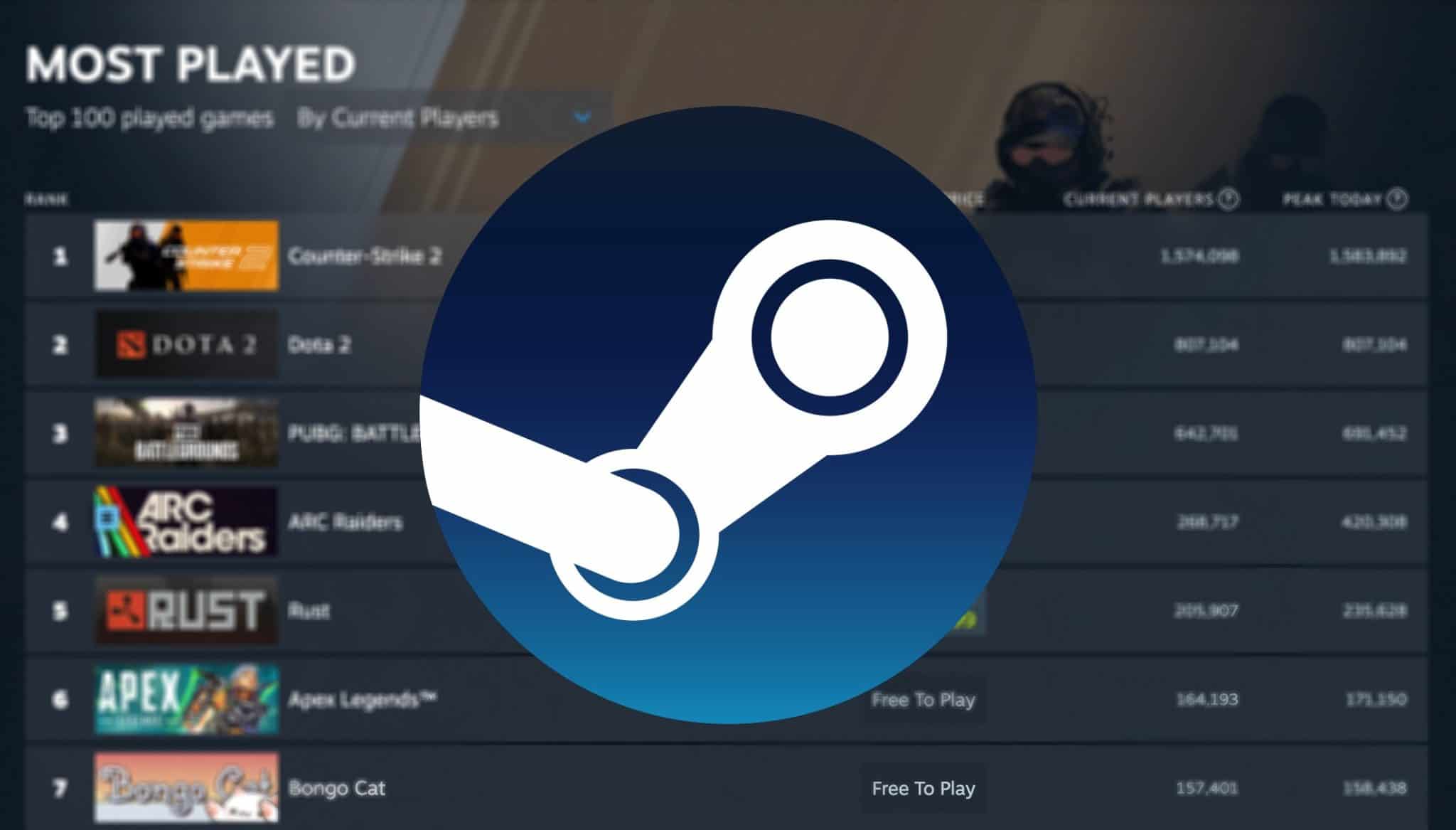

Steam 2026 4 New Free To Play Games Available Now AllKeyShop Com Showcase Steam Free Games 2026 Indie F2p Card Roguelike Sci Fi. The 15 Best Turn Based Strategy Games To Buy On The Steam Summer Sale 2025 Chris Most Anticipated Strategy And Wargames Of 2026 Including Hidden Gems . Top 10 Most Anticipated Games Of 2026 What To Watch Out For GAMES IN 2026 . The Most Played Games On Steam For 2026 So Far Cheat Code Central Most Played Games Steam 2026 2048x1167 . 50 MOST ANTICIPATED Strategy Games Of 2026 YouTube
Steam Sale 2026 Key Dates You Need To Know LevelUpTalk Steam Sale Schedule 2026 08 27 2025 7c35051e 2c22 4093 96f1. The 15 Best Real Time Strategy RTS Games Coming In 2026 The 10 Best Underrated Strategy Games You Have To Play In 2026.webp. The 15 Best Turn Based Strategy Games To Buy On The Steam Summer Sale 2025 7 Amazing Deals From The Steam Tower Defense Fest 2026 . Top 100 Most Followed Steam Games With A 2026 Release Date GameGrin Image 2026 01 11 191951369 . Best Free Strategy Games On Steam 2026 Top 10 Image


The 15 Best Real Time Strategy RTS Games Coming In 2026 The 10 Real Time Strategy Games That Changed The Genre Forever And Deserve Playing In 2026 1 . Ultimate Grand Strategy Games That Lived Up To Hype 2026 Grand Strategy Games 768x512 . TOP 5 Strategy Games Set To REVIVE The Genre In 2026 And Beyond Don T . The 15 Best Real Time Strategy RTS Games Coming In 2026 The 25 Best Strategy Game Deals Of The Steam Winter Sale 2025 . The 10 Strategy Games I Am Most Excited For 2026 Bolt Action Dev Diary 2 Sneak Peak How Slitherine Is Reimagining Combat In The Biggest WWII Tabletop Game In The World