Ever wondered how nice is 4K gaming and if it's truly worth the upgrade for your busy lifestyle? This comprehensive guide for US gamers in 2026 dives deep into the visual splendor, performance demands, and practical considerations of 4K gaming. We'll explore the hardware you need, budget-friendly options, and how this high-resolution experience can enhance your relaxation and social connections. Discover if the stunning clarity and immersive worlds of 4K gaming are the perfect fit for balancing work, family, and your passion for play. Find solutions to common setup issues and recommendations to maximize your gaming value without breaking the bank or dedicating endless hours to research. Learn about the latest trends and essential tips to make informed decisions for your next gaming leap.
Related games- Guide To Boost Roblox Games Performance & Fun
- Gaming PC 5070 Ti Ultimate Guide Maximize Your Play
- Guide How To Conquer Roblox Thunderbird Game
- Who Buys Gaming PCs? A 2026 Gamer's Guide
- Is GTA an RPG? Unpacking the Genre Debate for Gamers
What makes 4K gaming truly nice for the average gamer?
For the average gamer balancing work and life, 4K gaming offers an unparalleled visual feast. It transforms games by displaying four times the pixels of 1080p, resulting in incredibly sharp details, vibrant textures, and a profound sense of immersion. This clarity enhances the escapism many seek in gaming, making limited playtime more impactful and visually rewarding. You'll notice intricate environmental details and character models like never before, boosting overall enjoyment and relaxation.
How much does a decent 4K gaming setup cost in 2026?
While 4K gaming was once prohibitively expensive, 2026 sees more accessible options. A decent 4K setup typically ranges from $1500 to $2500 for a PC capable of running most new games at playable 4K frame rates (60 FPS+), plus another $300-$600 for a quality 4K monitor. This includes a powerful mid-to-high-range GPU (like an RTX 4070 Ti or RX 7900 XT), a modern CPU, ample RAM, and an SSD. Budget-conscious gamers can leverage upscaling technologies and older generation hardware to reduce costs.
Is 4K gaming worth it if I only game a few hours a week?
Absolutely, even with limited playtime, the visual fidelity of 4K can significantly enhance your experience. For gamers who prioritize quality over quantity, those few hours become a more immersive, visually stunning escape. It allows you to fully appreciate the art direction and detail game developers put in, turning a casual session into a premium, relaxing event. The investment can pay off in the sheer enjoyment and impact of each gaming moment.
What are the key components needed for optimal 4K gaming performance?
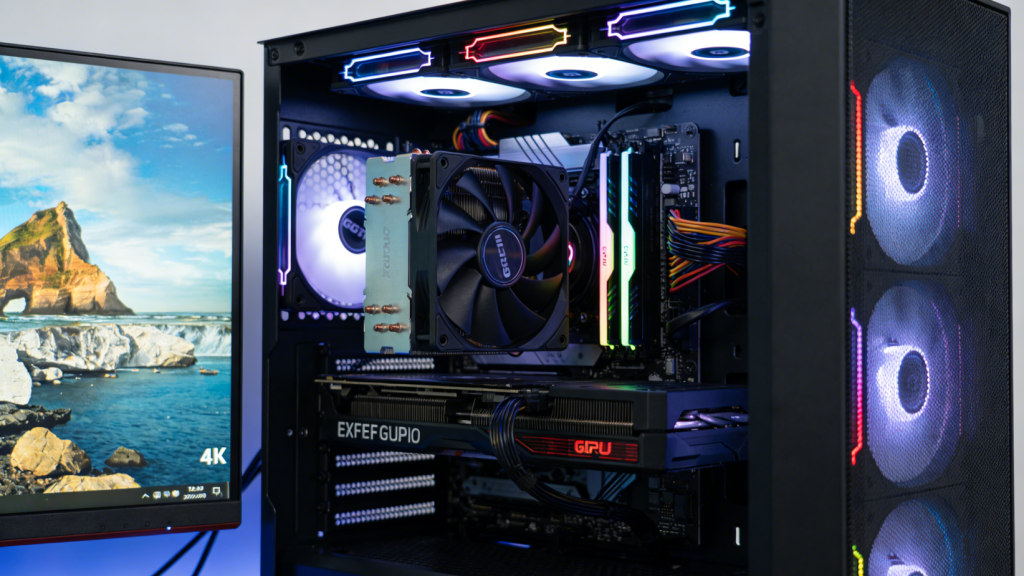
Achieving optimal 4K gaming hinges primarily on a powerful graphics card (GPU) such as an NVIDIA RTX 4080 SUPER or AMD RX 7900 XTX. A robust multi-core CPU (Intel i7/i9 or AMD Ryzen 7/9) from recent generations is also crucial to avoid bottlenecks, especially in open-world titles. You'll need at least 16GB (preferably 32GB) of high-speed RAM and a fast NVMe SSD for quick loading times. Finally, a 4K monitor with a 120Hz+ refresh rate and G-Sync/FreeSync ensures smooth, tear-free visuals.
How does 4K gaming compare to 1440p in terms of visual impact and performance demands?
4K gaming delivers a noticeably sharper image than 1440p, with four times the pixels of 1080p, compared to 1440p's 2.5 times. This translates to significantly finer details and less visible pixelation, especially on larger screens. However, 4K demands substantially more from your hardware, often requiring a GPU one tier higher than what would achieve similar frame rates at 1440p. 1440p remains an excellent balance of visual quality and performance for many, but 4K is the king of immersion.
What are common mistakes to avoid when building a 4K gaming PC?
Many gamers overlook the monitor's importance, pairing a powerful GPU with a mediocre 4K display that lacks high refresh rates or VRR. Another common mistake is underestimating the power supply unit (PSU) requirements; a high-end 4K system needs a reliable PSU with sufficient wattage. Skimping on the CPU can also create bottlenecks, even with a strong GPU. Finally, neglecting proper cooling for both the CPU and GPU can lead to thermal throttling and reduced performance over time, diminishing the overall 4K experience.
Can 4K gaming actually help me relax after a long day?
Yes, for many, the immersive quality of 4K gaming provides a deeper sense of escapism and relaxation. The stunning visual fidelity helps you get lost in virtual worlds, shifting focus away from daily stresses. Whether it's exploring a beautifully rendered landscape, solving puzzles in a serene environment, or simply enjoying the crisp visuals of a cozy game, 4K enhances the calming effect. It turns your screen into a window to another reality, making your downtime more profound and restorative.
As busy adults, we often find ourselves caught between the demands of work, family, and a longing for that precious downtime. For many, gaming isn't just a hobby; it's a vital escape, a way to unwind, connect with friends, or even sharpen cognitive skills. But in a world constantly pushing new tech, the question inevitably arises: how nice is 4K gaming, really, and is it a worthwhile pursuit for someone balancing life's many responsibilities?
You've seen the stunning screenshots and heard the buzz. 4K gaming promises an unparalleled visual feast, a level of detail that makes virtual worlds feel more real than ever. But is it just hype, or is there genuine value for the average gamer, especially when hardware upgrades can feel like a labyrinth of choices and costs? For the 87% of US gamers who play regularly, often clocking 10+ hours a week, and increasingly engaging in mobile and social gaming, understanding the true impact of 4K on their experience is key. This guide aims to cut through the noise, offering practical, no-nonsense advice for adult gamers looking to optimize their fun, performance, and value without getting sucked into endless tech jargon or overspending.
We understand your pain points: the struggle with setup issues, the quest for optimal performance, finding games that fit limited time, and making smart hardware upgrade decisions on a budget. This article is designed to be your trusted friend, providing clear answers to the most common questions about 4K gaming in 2026, so you can decide if this visual upgrade is the perfect enhancement for your gaming life.
What Exactly Makes 4K Gaming So Nice?
When gamers ask how nice is 4K gaming, they're often referring to the incredible visual fidelity. 4K resolution, also known as Ultra High Definition (UHD), packs four times the pixels of standard 1080p Full HD. This means games display with astonishing clarity, sharper textures, and finer details you might miss at lower resolutions. Think about sprawling open worlds: individual leaves on trees, distant architectural details, or intricate patterns on character armor become strikingly clear. This enhanced detail significantly boosts immersion, pulling you deeper into the game's narrative and environment. For those who play narrative-driven single-player titles or simply enjoy exploring beautiful virtual landscapes after a long day, the visual upgrade is truly transformative.
Is 4K Gaming Worth the Investment for Busy Adults?
This is a crucial question for many. For adults who game to unwind, socialize, or occasionally compete, the value proposition of 4K gaming extends beyond just raw visuals. While the initial investment in a powerful GPU and a 4K monitor can be substantial, the long-term enjoyment can justify the cost. Many adult gamers prioritize quality over quantity, preferring a few hours of breathtaking visual immersion over endless hours of mediocre experiences. The enhanced realism can make those limited gaming sessions feel more impactful and relaxing. Moreover, with current trends leaning towards more visually stunning and expansive game worlds, a 4K setup ensures you're ready to experience these titles at their absolute best for years to come, offering a degree of future-proofing.
What Hardware Do I Need for a Smooth 4K Gaming Experience?
Achieving a smooth 4K gaming experience primarily hinges on your graphics card (GPU). In 2026, a high-end GPU like NVIDIA's RTX 4070 Ti SUPER or AMD's RX 7900 XT is often considered the minimum for playing demanding titles at 4K with decent frame rates (60 FPS+). For truly uncompromised performance at higher refresh rates, an RTX 4080 SUPER or RX 7900 XTX is ideal. Your CPU also plays a role, particularly in open-world games or titles with many AI elements, so a modern multi-core processor (e.g., Intel i7/i9 or AMD Ryzen 7/9 from recent generations) is recommended. Additionally, 16GB of RAM is a solid baseline, with 32GB offering more headroom for multitasking and future games. Don't forget a high-refresh-rate 4K monitor; aiming for 120Hz or 144Hz will provide the smoothest visuals, especially if your GPU can push those frames.
- Graphics Card (GPU): NVIDIA RTX 4070 Ti SUPER / AMD RX 7900 XT or higher.
- Processor (CPU): Intel Core i7/i9 (13th/14th Gen) or AMD Ryzen 7/9 (7000/8000 series).
- RAM: 16GB DDR4 (minimum), 32GB DDR5 (recommended).
- Storage: NVMe SSD for fast game loading times.
- Monitor: 4K resolution, 120Hz+ refresh rate, G-Sync/FreeSync compatible.
Can I Get Into 4K Gaming on a Budget?
Getting into 4K gaming on a strict budget requires smart compromises. While a top-tier setup costs several thousand dollars, you can make strategic choices. Look for previous generation high-end GPUs on the used market (e.g., RTX 3080 or RX 6800 XT) which can still offer playable 4K frame rates with reduced settings. Opt for a 4K monitor with a 60Hz refresh rate instead of 120Hz+, as these are significantly cheaper. You might also consider upscaling technologies like NVIDIA's DLSS or AMD's FSR, which render games at a lower resolution (e.g., 1440p) and intelligently upscale them to 4K, providing near-native 4K visuals with much better performance. This allows for a more accessible entry point to the world of high-resolution gaming without breaking the bank. Remember, patience for sales and refurbished components can also save you a lot.
How Does 4K Gaming Impact Competitive Play and Casual Relaxation?
For competitive gamers, the immediate answer to how nice is 4K gaming might be more nuanced. While the clarity is undeniable, the higher resolution demands more processing power, which can lead to lower frame rates unless you have a top-tier system. Many esports pros still prefer 1080p or 1440p at ultra-high refresh rates (240Hz+) for maximum responsiveness. However, for casual competitive play or games where visual information is critical (like identifying distant targets in a battle royale), 4K's clarity can offer an advantage. For casual relaxation, 4K gaming is almost universally beneficial. The stunning visuals create a more tranquil and immersive environment, perfect for unwinding after a stressful day. Social games played in 4K, whether cozy co-op adventures or exploring shared virtual spaces, feel more vibrant and engaging for everyone involved.
Are There Any Downsides to 4K Gaming I Should Know About?
Despite its visual appeal, 4K gaming does have some downsides. The primary one is cost: both the initial hardware investment and potentially higher electricity consumption from more powerful components. Performance is another factor; even with powerful hardware, some of the most graphically demanding games might struggle to hit ultra-high frame rates at native 4K, requiring you to adjust settings. This can be a frustration if you're chasing the absolute highest FPS. File sizes for 4K textures are also larger, meaning games will take up more storage space and longer to download. Furthermore, while the visual gain is significant, the perceived difference can diminish somewhat on smaller screens or if you sit far from your monitor. Ensure your internet speed can handle larger game updates efficiently, especially with games like the latest massive multiplayer titles trending this month.
What Are the Best Games to Experience in 4K Right Now?
Many games truly shine in 4K. Visually stunning open-world RPGs like Cyberpunk 2077 (with Path Tracing), Starfield, and The Witcher 3: Wild Hunt (next-gen update) become even more breathtaking. Cinematic adventure games such as God of War, Horizon Forbidden West (PC), and Alan Wake 2 offer incredible detail and atmosphere. Even popular social/cozy games like Palworld or Valheim benefit from the extra crispness, making their unique art styles pop. Look for titles with strong art direction, detailed environments, and good texture work to fully appreciate the 4K difference. This month's data shows high engagement in graphically rich story-driven games and expansive online worlds, both of which are prime candidates for a 4K showcase.
How Can I Optimize My 4K Gaming Setup for Performance and Value?
Optimizing your 4K gaming setup involves a few key steps. First, ensure your monitor's settings are correctly configured for its native resolution and refresh rate. Enable Variable Refresh Rate (VRR) technologies like G-Sync or FreeSync for tear-free gameplay. Within games, experiment with graphics settings; sometimes, reducing a single setting like Volumetric Clouds or Ray Tracing quality from Ultra to High can yield significant FPS gains with minimal visual degradation. Keep your graphics drivers updated, as new releases often bring performance improvements. Consider a good cooling solution for your GPU and CPU to prevent thermal throttling. Finally, regularly check for firmware updates for your monitor and GPU to ensure optimal compatibility and performance. Investing in a quality PSU is also crucial for stable power delivery to your high-end components.
What's the Future of 4K Gaming Looking Like?
The future of 4K gaming is bright and increasingly accessible. With advancements in GPU architecture, more efficient upscaling technologies (like DLSS and FSR becoming standard), and the ongoing optimization of game engines, achieving excellent 4K performance will become easier and more affordable. We're also seeing a trend towards monitors with higher refresh rates at 4K, potentially reaching 240Hz or even beyond, offering the best of both worlds: stunning visuals and buttery-smooth motion. As console generations continue to push for 4K as a baseline, PC hardware will follow suit, making 4K gaming the standard rather than a premium niche. Expect more innovative display technologies, greater power efficiency, and seamless integration with emerging trends like VR and cloud gaming, making the
Unparalleled visual clarity; Enhanced immersion and detail; Significant hardware investment; Performance optimization crucial; Balancing cost vs experience; Relaxing and engaging gaming for adults; Future-proofing your setup.
35
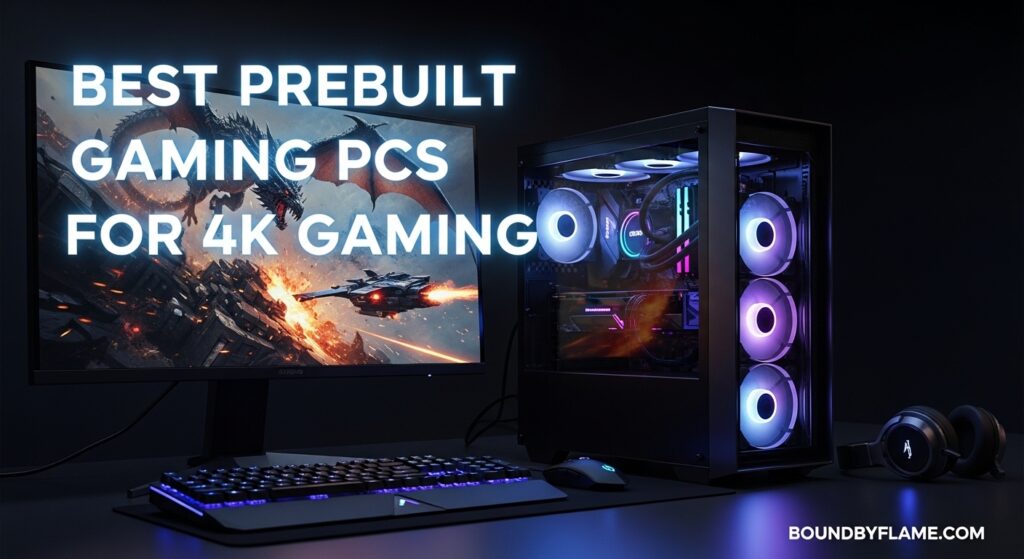



2026 4K Gaming Monitors GPU Balance And Best Settings 2 3 1 . 10 Best Prebuilt Gaming PCs For 4K Gaming April 2026 Top Tested Best Prebuilt Gaming PCs For 4K Gaming 1024x559 . TOP 30 BIGGEST NEW Games Coming In 2026 With Crazy NEXT GEN 4K Graphics . ASUS ROG A Complete Gaming Ecosystem Seen Firsthand CES 2026 G 129b3e09 Asus Rog 20th Ces 2026 1200x624 1 . WQHD Vs 4K Gaming 2026 Welche Aufl Sung Lohnt Sich Wirklich Und F R Hardware Wqhd Vs 4k Gaming 2026 Fuer Wen Lohnt Sich

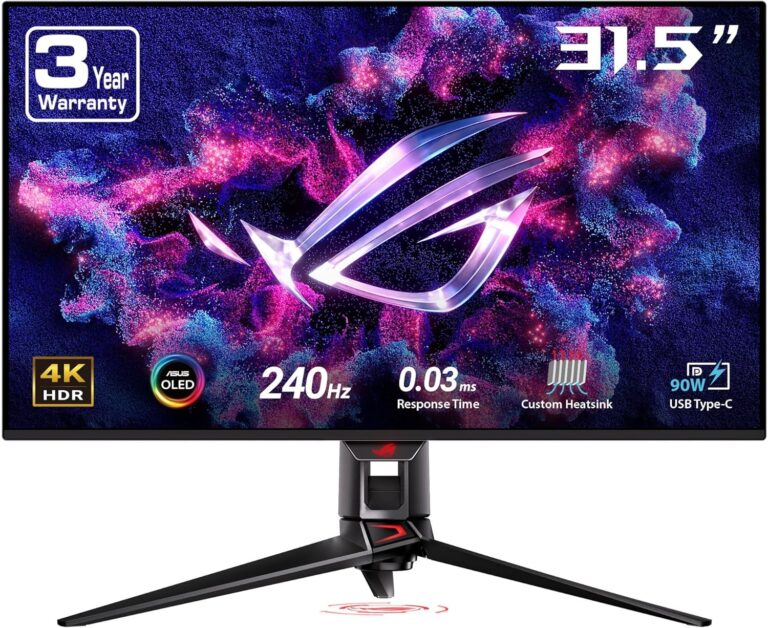
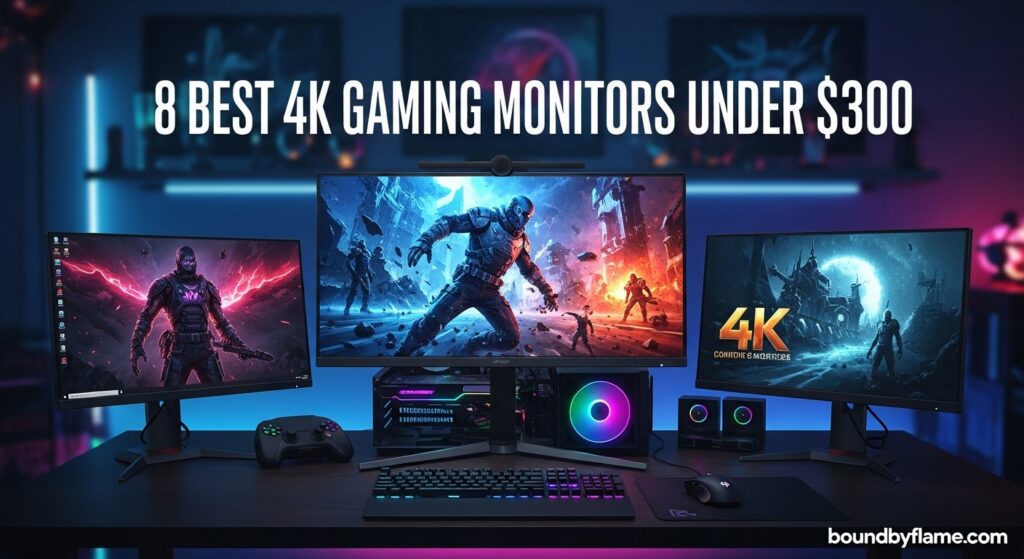

Top 10 Most Anticipated Games Of 2026 What To Watch Out For TVN GAMES IN 2026 . Best 4K Gaming Monitors 2026 Top 4K Displays For PC Gaming ASUS ROG Swift 32 4K OLED Gaming Monitor 768x628 . 8 Best 4K Gaming Monitors Under 300 March 2026 Budget 4K Guide 8 Best 4K Gaming Monitors Under 300 1024x559 . 6 Best 4K Gaming GPUs Of 2026 Top 4k Gaming Gpus 2025 . 2026 4K Gaming Monitors GPU Balance And Best Settings 4 3 1 1024x576


5 Best 4K TVs For PC Gaming In 2026 Comparison And Review 4k Tv For Pc Gaming . Rekomendasi Smart TV Terbaik 2026 Pilihan 4K Gaming SuperNews Tv.webp. TOP 50 BIGGEST NEW Games Coming In 2026 With Crazy NEXT GEN 4K Graphics . TOP 40 BIGGEST NEW Games Coming In 2026 With Crazy NEXT GEN 4K Graphics . Best 240Hz Gaming Monitors UK 2026 Thumb Best 4k Gaming Monitors Uk 2026



20 Most Anticipated Video Games Of 2026 Page 10 1200x675 . 2026 4K Gaming Monitors GPU Balance And Best Settings 4 1 1 1024x576 . 25 MOST INSANE Amazing REALISTIC GRAPHICS Games Coming Out In 2026 . Best 4K Gaming Monitors Of 2024 Best 4K Gaming Monitors Of 2024 . Best Gaming PC Builds For 2026 Best Gaming PC Builds For 2026.webp





4K 2026 Games Wallpapers 110 24795 . Download 3d 2026 Digits 4k 2026 Concepts Red Technology Background Thumb2 3d 2026 Digits 4k 2026 Concepts Red Technology Background 2026 New Year . 4K 2026 Games Wallpapers 40 21660 . 4K 2026 Wallpapers 80 22831 . Call Of Duty Mobile Mission 2026 Wallpaper HD Games Wallpapers 4k Call Of Duty Mobile Mission 2026 Se





4K 2026 Games Wallpapers 150 25547 . Best 4K Gaming Monitors In 2026 The Ultra Hi Res Panels I Highly . 2560x1440 Gta 6 2026 Game 1440P Resolution HD 4k Wallpapers Images Gta 6 2026 Game 3v . 3440x1440 Gta 6 2026 UltraWide Quad HD 1440P HD 4k Wallpapers Images Gta 6 2026 D7 . 1 Popular 2026 Games HD Wallpapers In 4K 3840x2160 Resolution Images Wl War For Westeros Hd Game Of Thrones Gaming 93191


The Best SSD For The Steam Deck Xbox ROG Ally And Ally X In 2026 . 8 Best Gaming PCs For 4K Gaming July 2026 Tested Featured . The Most Anticipated Games Of 2026 That Gamers Can T Wait For 20250822 Most Anticipated Games Of 2026 . 7 Best Gaming PCs Of 2026 Power Performance And Value Revealed Top Gaming Pcs 2026 1lmv2 . Xbox 2026 Comeback Starts On January 22 With Forza Horizon 6 And Fable Best Gaming Consoles Hero Image